Search is changing quickly.
For years, businesses focused on one main question:
How can we rank higher on Google?
That question still matters. However, it is no longer the only one businesses should ask.
People now use AI tools to research products, compare businesses, find solutions and ask detailed questions. This creates a new challenge for companies that want to stay visible online.
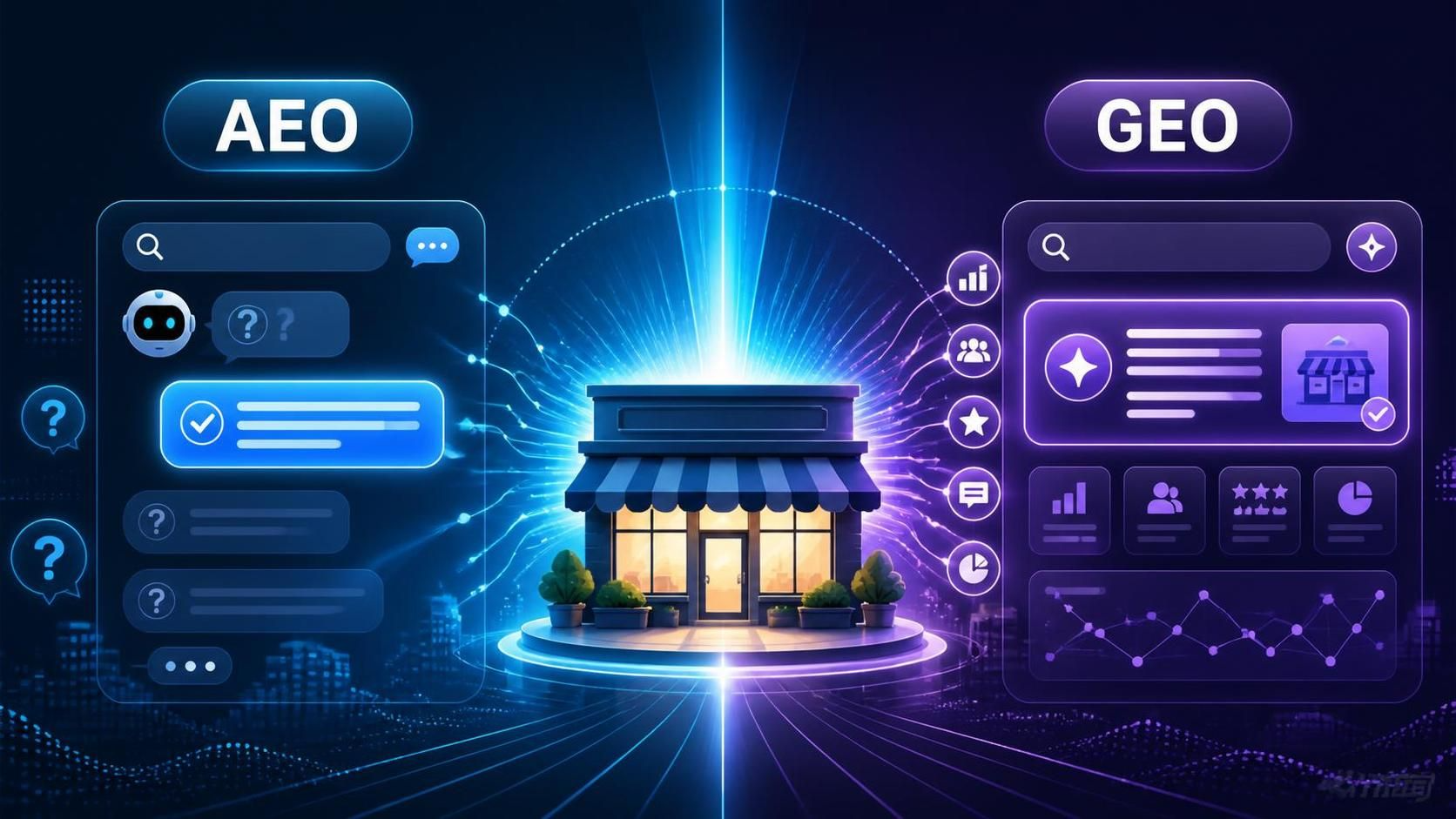
Two strategies have become increasingly important: Answer Engine Optimization (AEO) and Generative Engine Optimization (GEO).
They are closely related, but they focus on different aspects of modern search.
What Is Answer Engine Optimization?
Answer Engine Optimization is the process of creating content that directly answers questions and makes information easy for search and answer systems to understand.
Traditional SEO often focuses on keywords, rankings and organic traffic.
AEO focuses more on questions and useful answers.
For example, a traditional SEO strategy might target:
USB 3.0 cable Lusaka
An AEO strategy might also target questions such as:
What USB cable do I need for a portable SSD?
Or:
What is the difference between USB 3.0 Micro-B and USB-C?
The goal is to provide a clear answer that satisfies the user’s question.
AEO Starts With Real Questions
A strong AEO strategy begins with the questions customers actually ask.
These questions can come from:
- Customer enquiries
- Sales conversations
- Search queries
- Product questions
- Support requests
- Online discussions
- Frequently asked questions
Once you know the questions, create useful answers.
Keep those answers direct and easy to understand.
Avoid forcing keywords into every sentence.
What Is Generative Engine Optimization?
Generative Engine Optimization is the process of improving a brand’s online presence so generative AI systems can better discover, understand and reference information about the business.
GEO goes beyond one question or one webpage.
AI systems can encounter information about a business from many sources.
These can include:
- Business websites
- Product pages
- Industry publications
- Reviews
- Business directories
- News websites
- Expert articles
- Social platforms
- Other relevant websites
This means your website is only one part of your online identity.
Your wider digital presence also matters.
AEO and GEO Are Different
AEO and GEO are often treated as the same thing.
They are not exactly the same.
AEO focuses mainly on answering questions.
GEO focuses more broadly on visibility within generative search.
A simple way to understand the difference is:
SEO → Discoverability
AEO → Answerability
GEO → Generative visibility
These strategies can work together.
SEO can help people and search engines discover your content.
AEO can make your information easier to use as an answer.
GEO can help strengthen how your brand is represented across AI-driven search experiences.
Why Google Rankings Are No Longer Enough
Imagine that your website ranks first for an important keyword.
That sounds like success.
However, a potential customer may not visit a traditional search results page.
They might ask an AI system:
What are the best companies for this service?
The AI system may provide a short list of recommendations.
Your competitor could appear in that answer even if your website ranks higher for some traditional keywords.
This creates a visibility gap.
Your business may have strong search rankings but limited visibility in AI-generated answers.
That is why businesses should think beyond rankings.
Search Is Becoming More Conversational
Traditional search often follows this path:
Search → Results → Website → Decision
AI-assisted search can look very different:
Question → Answer → Follow-up question → Comparison → Recommendation → Decision
For example, someone might ask:
What microphone is suitable for a home recording studio?
They may then ask:
Which one is better for vocals?
Then:
Where can I buy one in Lusaka?
The user is no longer making three separate searches.
They are having one continuous research conversation.
Your content should therefore answer more than one isolated keyword.
It should help users move through the entire decision-making process.
Find Information Gaps
One of the best ways to improve AEO and GEO is to stop thinking only about keywords.
Instead, ask:
What information does the customer need before making a decision?
Consider a customer buying a cable for a portable SSD.
They may want to know:
- Which connector does the SSD use?
- Is USB 3.0 fast enough?
- Will it work with their computer?
- What cable length should they choose?
- Does it support data transfer?
- Will it work with their external hard drive?
A product page that answers these questions provides much more value than a page that simply repeats the product name.
The same approach works for services.
An SEO agency could answer:
- What is an SEO audit?
- Why is my website not ranking?
- How long does SEO take?
- What is technical SEO?
- What is local SEO?
- How should SEO performance be measured?
These answers make the website more useful.
Build Topic Authority
One article is unlikely to establish strong topical authority.
A group of connected resources can do much more.
Imagine a company that sells networking equipment.
Instead of publishing only one article about Ethernet cables, it could create useful resources about:
- CAT5e vs CAT6
- CAT6 vs CAT6A
- CAT8 explained
- Ethernet speeds
- Ethernet cable lengths
- Shielded vs unshielded cables
- 10Gb Ethernet
- How to choose an Ethernet cable
- Common Ethernet connection problems
Each article answers a different question.
Together, they create a deeper information resource.
This helps users find answers at different stages of their research.
It also gives search engines and AI systems more context about the company’s subject expertise.
Original Information Can Give You an Advantage
AI-generated content is now everywhere.
As more companies publish similar articles, generic content becomes less distinctive.
Businesses should therefore create information based on real experience.
This could include:
- Original research
- Product testing
- Case studies
- Customer questions
- Industry observations
- Local market insights
- Expert opinions
- Original statistics
- Product comparisons
- Demonstrations
For example, an electronics business can publish guides based on the problems customers regularly face.
An SEO agency can publish insights based on actual website audits and campaigns.
This gives the content a stronger connection to real-world experience.
Your Website Is Not Your Entire Digital Identity
GEO should not be treated as a website-only strategy.
Information about your business can appear across the internet.
This may include:
- Industry websites
- Business directories
- Reviews
- News publications
- Partner websites
- Professional profiles
- Product listings
- Expert contributions
Consistency matters.
Your business name, services, products and other important information should be accurate and consistent across relevant sources.
This helps create a clearer digital identity.
Reviews Can Strengthen Your Online Presence
Reviews provide more than star ratings.
A genuine customer review can explain:
- What the customer purchased
- Which problem they needed to solve
- Why they chose the business
- How the product performed
- What service they received
This provides useful context around the business.
Companies should focus on earning genuine reviews rather than trying to manufacture them.
Ask satisfied customers to share honest experiences.
Authentic feedback is more valuable than artificial praise.
Structured Data Still Matters
Structured data helps search engines understand the information on a webpage.
Depending on the page, structured data can describe things such as:
- Products
- Organizations
- Articles
- Events
- Reviews
- Breadcrumbs
- Frequently asked questions
Structured data should not be treated as an AI shortcut.
Its main purpose is to provide clearer information about the content of a page.
The best approach is simple:
Make important information easy for both people and machines to understand.
Write for People First
There is a temptation to write content specifically for AI.
That can create poor content.
Some businesses may fill pages with repetitive questions and keywords because they believe AI systems prefer that format.
The result can be difficult for people to read.
A better approach is:
Write the clearest answer for the customer first.
Then structure the content so search engines and AI systems can understand it.
Use:
- Clear headings
- Short paragraphs
- Direct answers
- Relevant examples
- Natural language
- Helpful internal links
- Accurate information
Do not write for a machine at the expense of the reader.
FAQs Still Have Value
Frequently asked questions can support both users and search visibility.
However, the questions should be genuine.
For a portable SSD cable, useful questions might include:
Does this USB 3.0 cable work with portable SSDs?
What connector does the cable use?
Can I use it with an external hard drive?
What devices are compatible with the cable?
Answer each question directly.
The purpose is to remove uncertainty.
Do not create unnecessary FAQs just to add keywords.
Internal Links Build Connections
Internal links do more than pass SEO value between pages.
They help create connections between related information.
For example, an article about CAT6A cables could link to pages about:
- CAT6 cables
- CAT8 cables
- Ethernet switches
- RJ45 connectors
- 10Gb networking
- Network installation
This creates a connected information structure.
Visitors can explore related topics without starting a new search.
Search engines can also better understand how the pages relate to each other.
Local Businesses Have an Opportunity
Local businesses should pay close attention to AEO and GEO.
A customer might ask:
Where can I buy studio equipment in Lusaka?
Or:
Where can I find a USB SSD cable in Zambia?
For local businesses, generative visibility connects closely with local SEO.
Your online presence should clearly communicate:
- What your business does
- What products or services you offer
- Where you operate
- Who you serve
- What makes your business relevant
- What customers say about you
Do not simply repeat your location throughout every page.
Build genuine relevance to the market you serve.
How to Measure AEO and GEO
Traditional SEO reporting often focuses on:
- Rankings
- Organic traffic
- Impressions
- Click-through rates
- Conversions
AEO and GEO require a broader view.
Businesses can also monitor:
Answer Visibility
Are important customer questions being answered by your content?
Brand Mentions
Is your business being mentioned on relevant websites and publications?
AI Visibility
Does your brand appear when users ask relevant questions in AI-powered search experiences?
Branded Searches
Are more people searching for your company by name?
Referral Traffic
Are AI and conversational platforms sending visitors to your website?
Conversions
Are those visitors becoming customers or generating enquiries?
The important point is that search visibility is becoming more than a ranking position.
A Practical AEO and GEO Strategy
You do not need to rebuild your entire website.
Start with five steps.
1. Find Real Questions
Ask your customers what they want to know.
Review sales enquiries and support questions.
Look at the questions people use when searching for your products or services.
2. Create Clear Answers
Build pages that answer those questions directly.
Give users enough information to make informed decisions.
3. Strengthen Your Business Identity
Make your business name, services, products and location clear across your online presence.
Keep important information accurate and consistent.
4. Publish Original Information
Share research, experience, testing, comparisons and insights.
Give people information they cannot easily find elsewhere.
5. Build Genuine Authority
Earn relevant mentions, reviews, partnerships and backlinks.
Focus on quality and relevance rather than creating links for the sake of creating links.
The Future of Search Is About Being the Best Answer
SEO is not disappearing.
Search is evolving.
Search engines are becoming better at providing answers.
AI systems are becoming research tools.
Users are asking more detailed questions and expecting faster answers.
This changes the meaning of online visibility.
The question is no longer only:
Where does my website rank?
A better question is:
When someone asks a question related to my business, can my company be discovered, understood and trusted?
That is where SEO, AEO and GEO come together.
Businesses that adapt to this change can build more than search rankings.
They can build a digital information ecosystem around their brand.
And in an AI-driven search environment, the businesses with the clearest, most useful and most credible information may have the strongest opportunity to be discovered, recommended and trusted.
Take the Next Step With ZEDSearch Agency
AEO and GEO are becoming important parts of modern digital visibility. Businesses that want to remain competitive need more than traditional keyword rankings. They need content that answers questions, builds authority and helps AI systems understand their brand.
ZEDSearch helps businesses in Zambia strengthen their online presence through Search Engine Optimization, content optimization, technical SEO and digital growth strategies.
Whether you want to improve your website’s search visibility, build topical authority or prepare your content for the changing search landscape, ZEDSearch can help you develop a strategy built around your business goals.
Ready to improve your online visibility? Choose ZEDSearch to build a stronger search strategy for the future.

Leave a Reply